Your Cart is Empty


Save time.
Let us cut your fabric.
Professional contract cutting services on 100+ fabrics and materials.
-
Save time - stop hand cutting and work smarter
-
Precision cuts - perfectly cut pieces, every single time
-
Streamlined sourcing - buy fabrics and have them cut in one place
-
Low pricing- Starting as low as $50

Save time.
Let us cut
your fabric.
Professional contract cutting
services on 100+ fabrics and materials.
-
Save time - stop hand cutting and work smarter
-
Precision cuts - perfectly cut pieces, every single time
-
Streamlined sourcing - buy fabrics and have them cut in one place
How does it work?
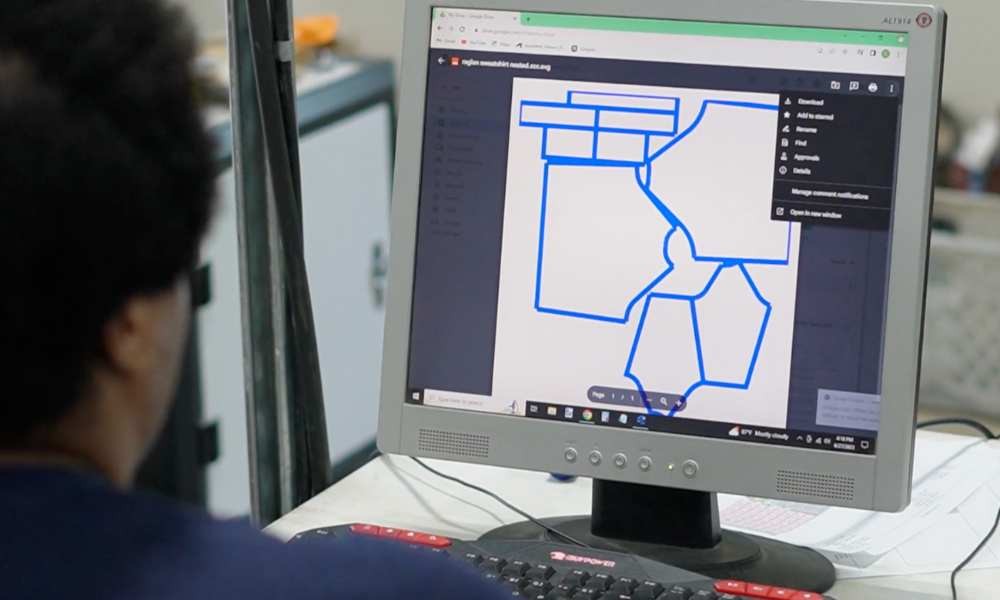
1. Submit File
Submit your file(s) and get a free quote. The process is quick and our expert team will help answer all of your questions.
2. Select Fabric
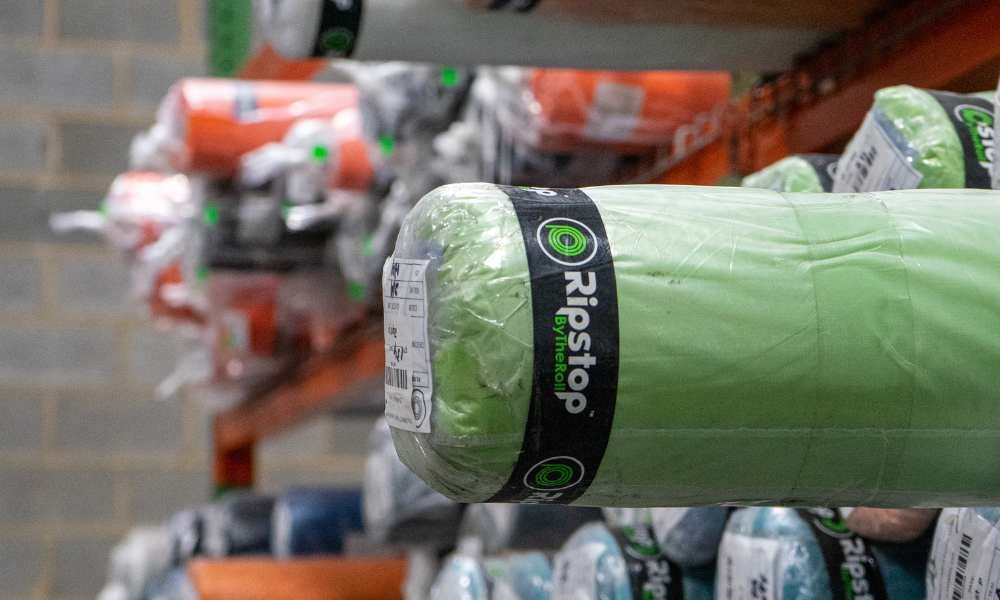
Choose from 100+ technical fabrics and materials in-stock and ready to cut at our warehouse. No need to send in fabric.
3. Receive Precise Cuts
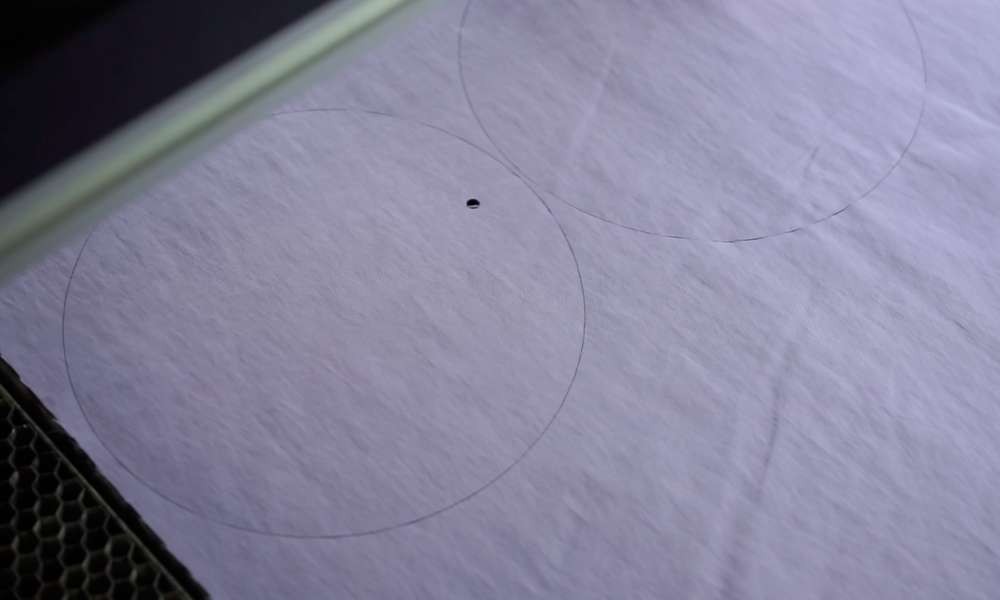
Get a shipment of perfectly cut parts delivered to your door, ready for sewing and manufacturing in just a few days.
As a small-business, time is your most valuable asset (and there's never enough of it).
Our contract fabric and material cutting service will save you time so that you can focus on what matters - creating great products, delighting customers, and growing your business.
Click HERE to start your fast and free quote.
Experience with cutting the best technical materials on the planet

FAQs
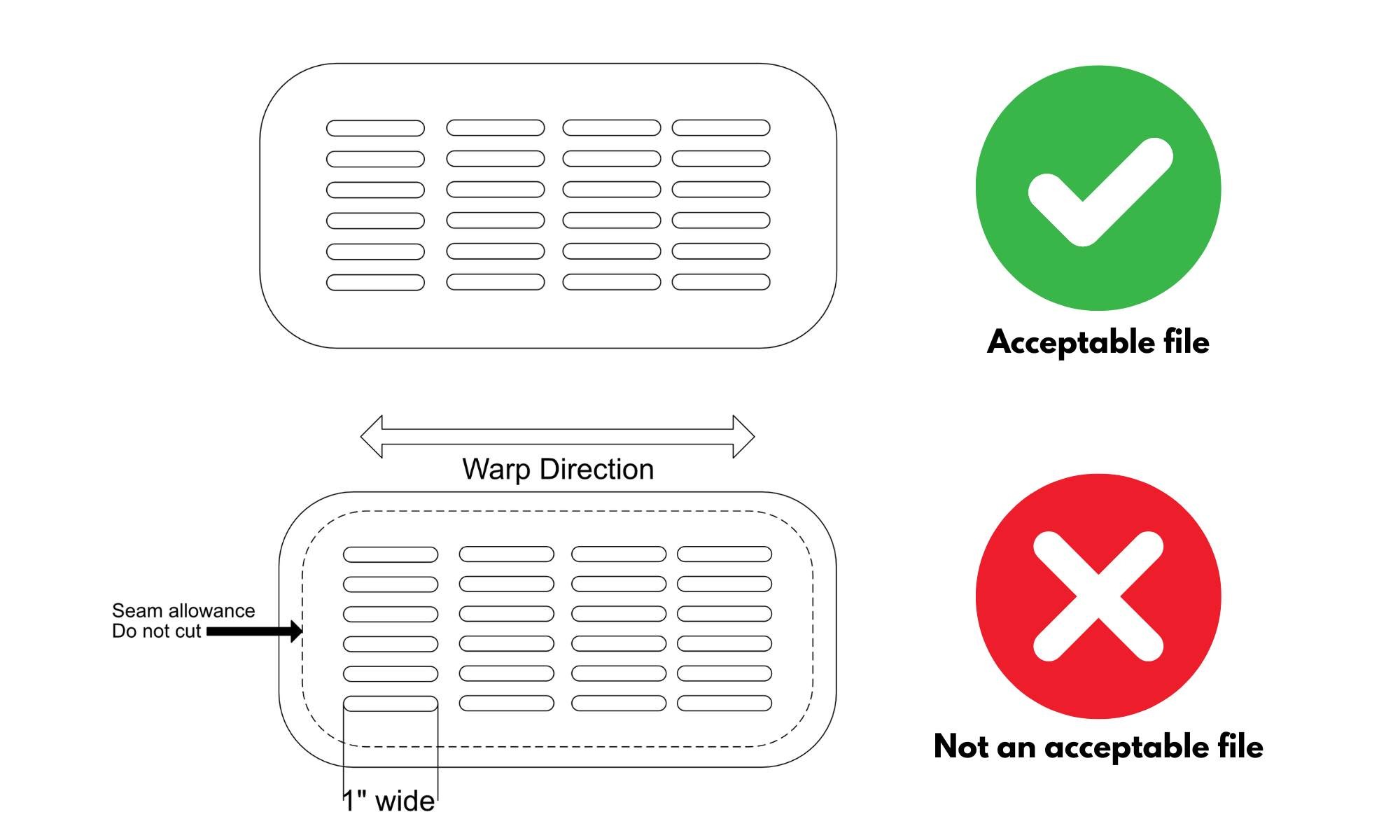
To ensure a smooth process, we have a few requirements and best practices for the cut files that you submit to us.
-
File type - All files must be in .dxf format. This file type is an export option for many CAD and vector drawing programs.
-
Scale - Parts should be submitted at 100% scale (1:1). This means that you should submit cut files already scaled to the exact size that you want for the part.
-
Units - Design in inches or mm. On our standard intake form, you’ll have the option to tell us which units you’re using in your files.
-
Closed and non-intersecting lines - All shapes should be closed with no intersecting or overlapping cut lines.
-
Submit parts without nesting - When creating parts, do not make files with multiple parts nested together. Our team will do this with special software. Simply submit one file per part that you want to cut.
Of course, if you need help or have questions along the way, a member of our cut team will be happy to help. At this time, we do not offer a cut file creation service, but we can guide you on minor changes or suggest outside services for getting your cut files drawn by a professional.
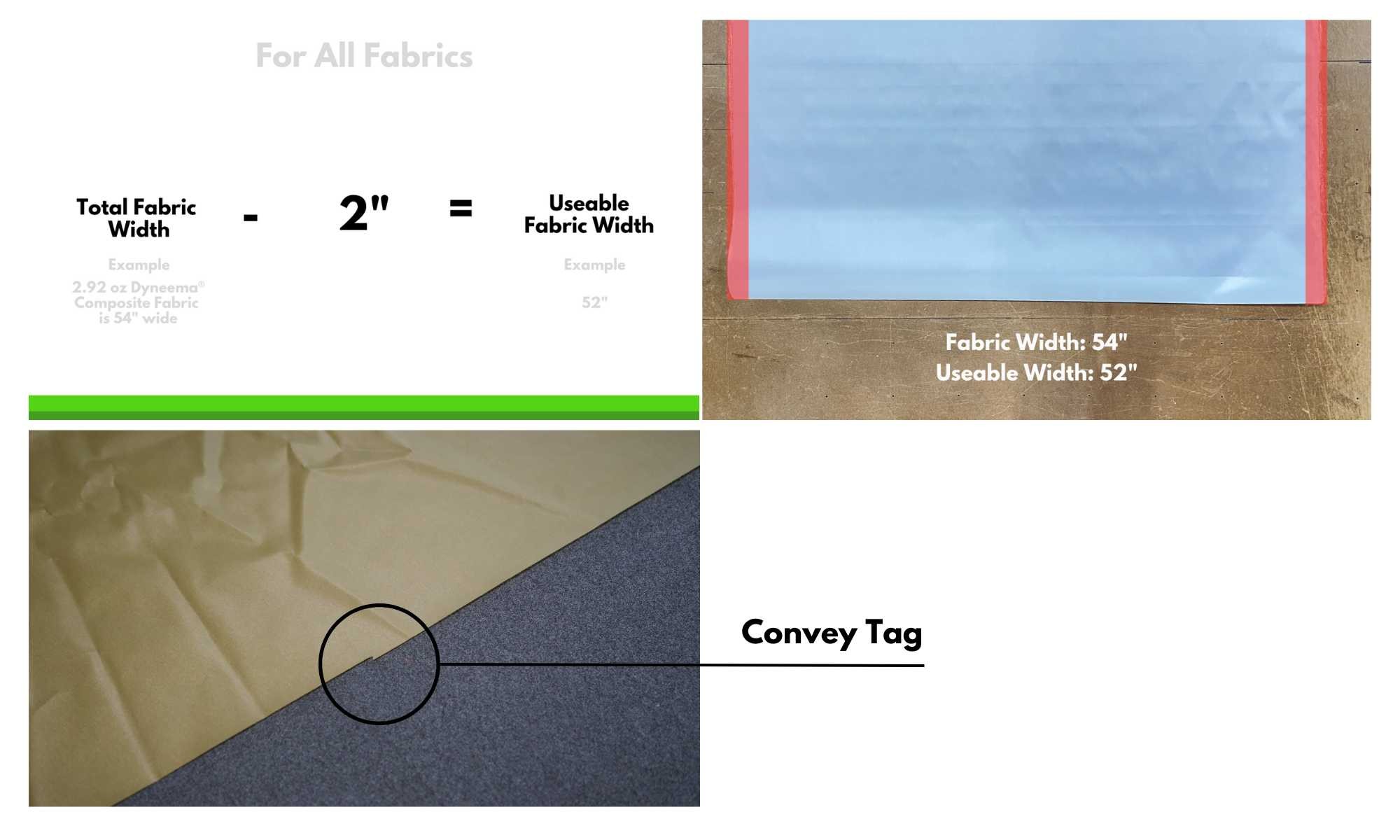
The maximum part size depends on a couple things, including which cutter we’re using, the fabric/material we’re cutting from, and any requirements that you have for the orientation of the part.
In general, we can cut parts up to 70” in width with essentially no limitation in length. When cutting on a specific fabric/material, the max part width is 2” less than the width of the fabric/material itself. The 2” margin allows for process variation to ensure that all parts can be properly cut out of the fabric/material.
For parts that are longer than the bed of the cutter, there may be small imperfections at the point where the machine advances. See below for an example.
Our Cut Support team will advise you on any large parts that approach the limits of our machine capability or that require special consideration before you place your order.
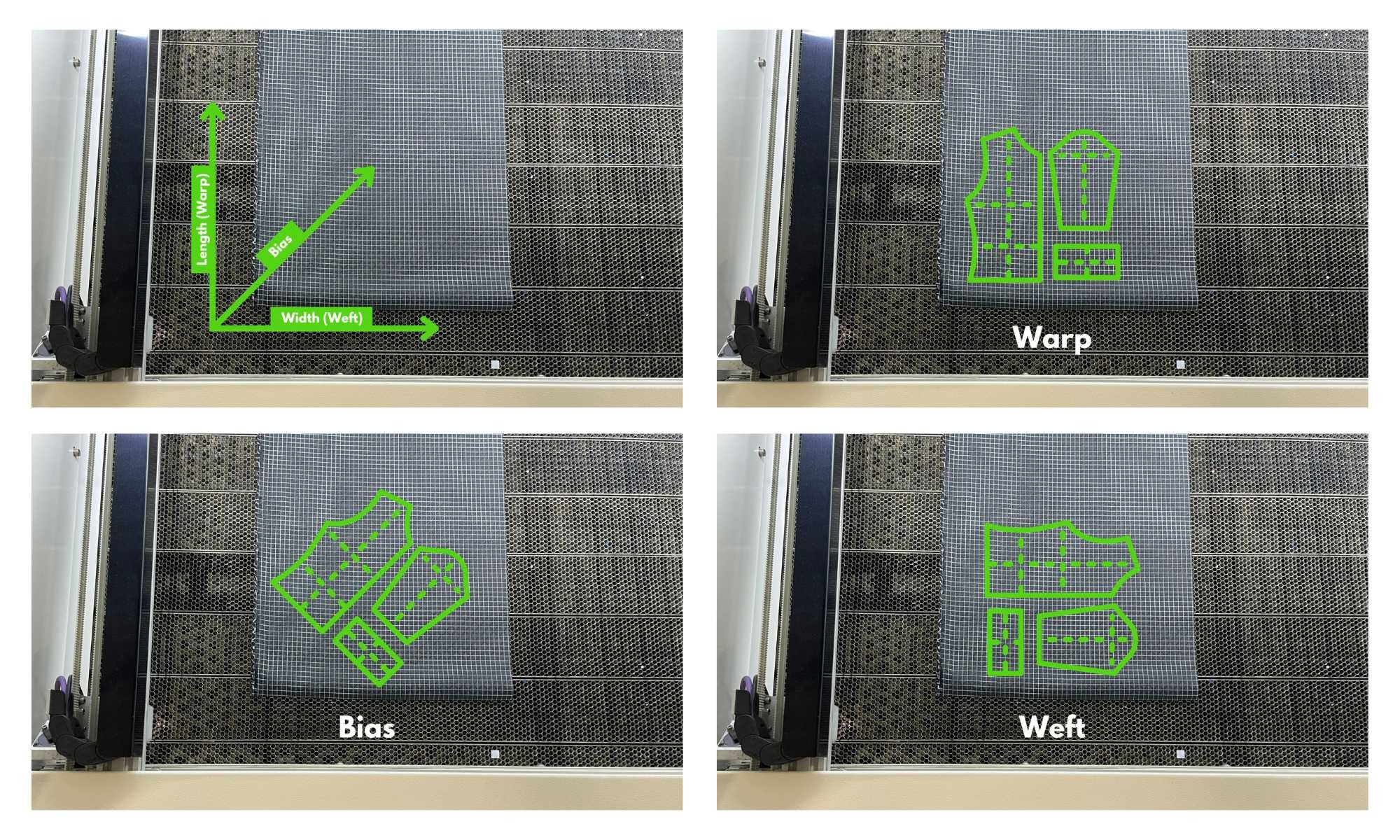
If any of your parts have specific orientation requirements, we’ll need to know that before proceeding with a quote. Part orientation affects the cost of cutting through efficient use of material and optimization of the cut path.
Why would you want to orient your parts in a specific direction? Depending on your application and the material, you may get a better end result by cutting the parts a certain way. Most fabrics have warp (lengthwise), weft (widthwise), and bias (diagonal) directions - each with unique properties like thread count and stretch. If you’re making a garment, you may want to cut parts along the bias for more stretch/give. In contrast, if you’re making a tote bag that’s only used for carrying stuff, you probably don’t care which way the cut parts are oriented.
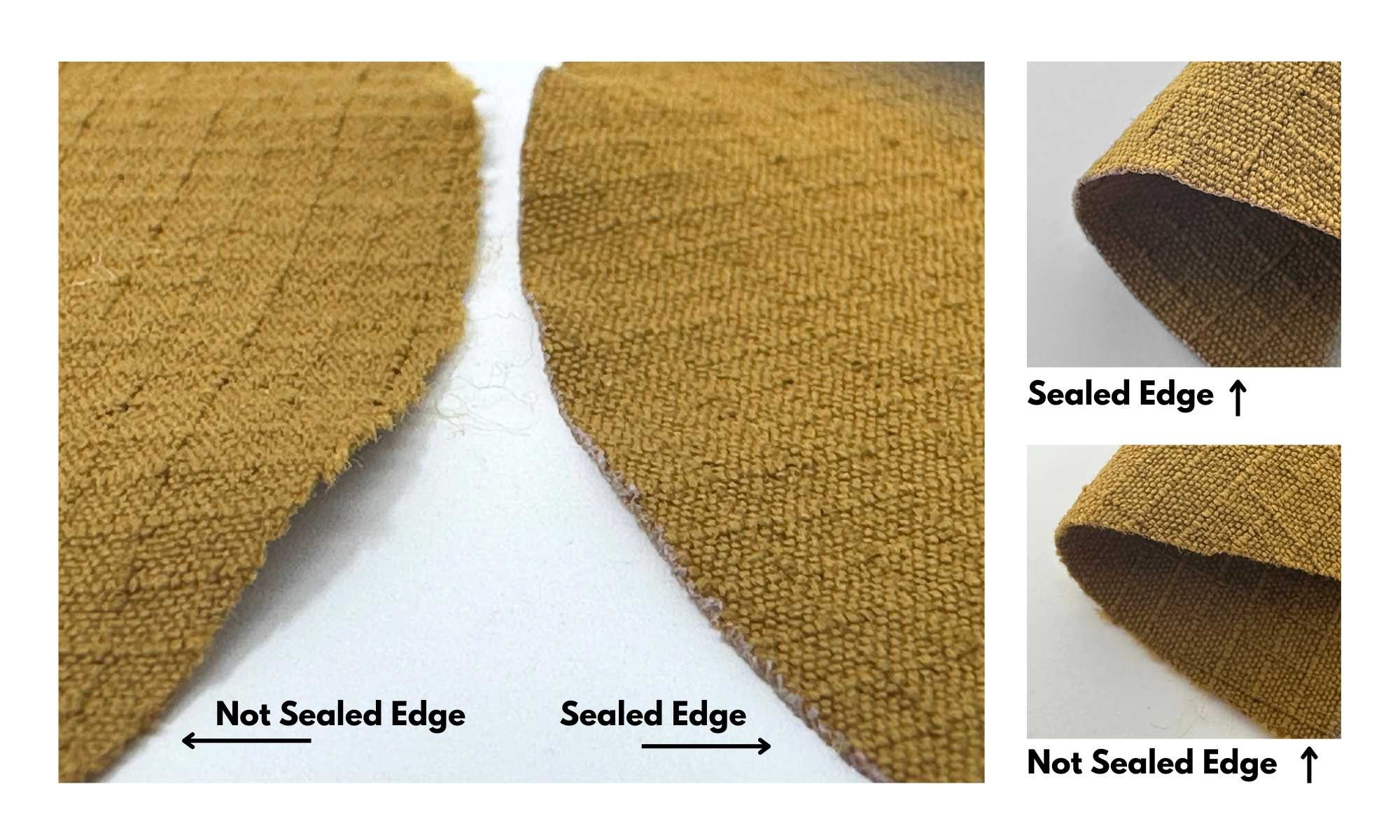
By sealed edges, we mean that the cut edges of the material have been fused together by heat - typically through a laser or ultrasonic device. If your job requires sealed edges, you can select this option when ordering and we’ll only use a machine that cuts and seals at the same time. The process of cutting and sealing is slightly slower than cutting only, so there is a X% upcharge when opting for sealed edges.
Because of the increased cost of sealed edges, it’s important to determine whether or not you actually need them for your parts. Here’s a breakdown of typical use cases to help you out:
Sealed Edges YES
-
Parts where the raw edge will not be sewn or bound - think zipper pulls, strips
-
Uncoated and loosely woven materials - any material that will fray badly, thus making it harder to work with your production
Sealed Edges NO
-
Coated materials (silicone, PU, etc) - coatings stabilize the fabric weave and thus naturally prevent fraying after cutting in most cases
-
Laminated materials (X-pac, DCF, etc) - the lamination process stabilizes the face fabric of most laminates and naturally prevents fraying after cutting in most cases
Ultimately, the decision to pay extra for sealed edges depends on your specific application, the parts you’re cutting, and the fabric you’re cutting from. Our Cut Support team can also provide guidance to help you make the best decision.
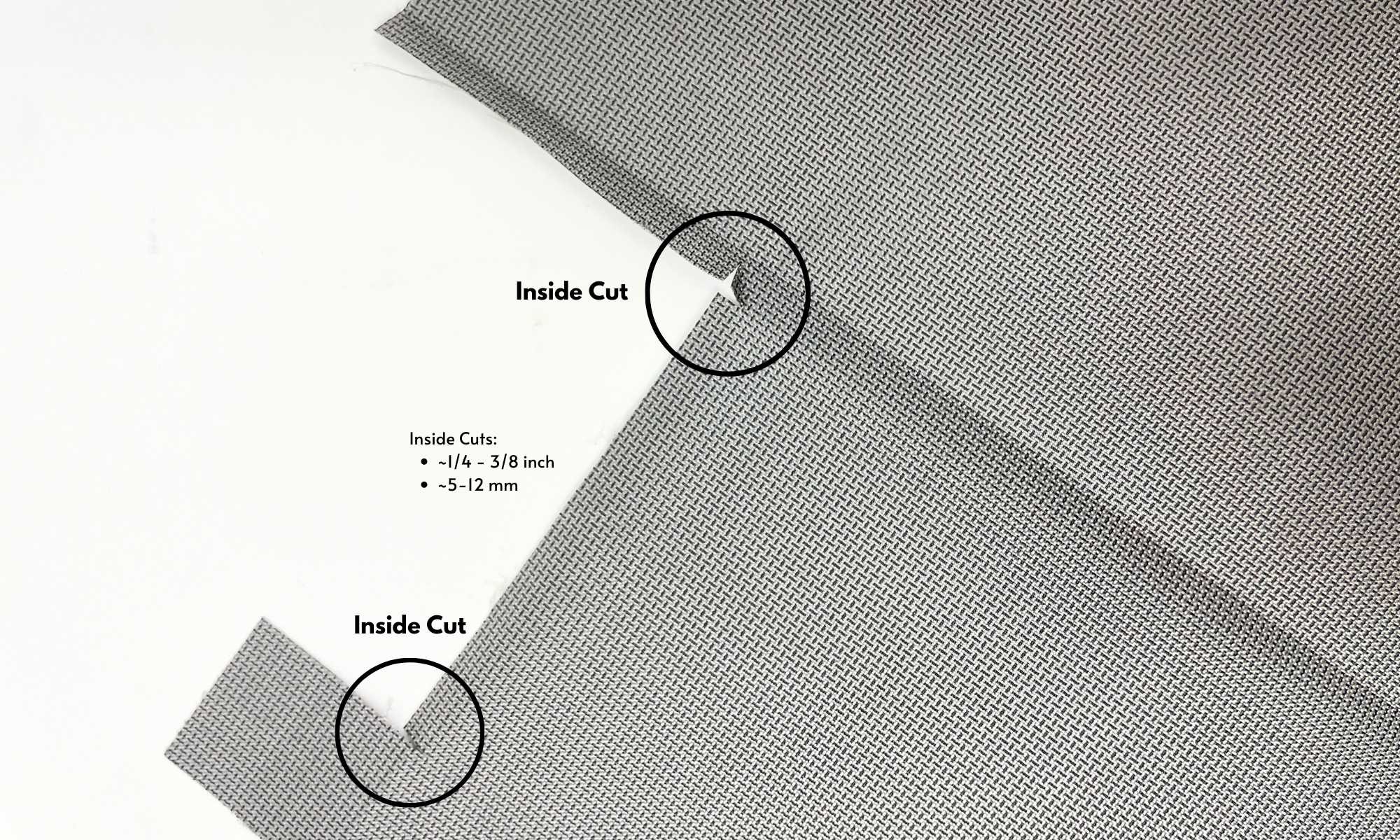
Inside cuts are part geometries where the cut path is less than 180 deg that include any point where the cut head has to completely stop and change directions. That’s a long winded explanation, so see below for an example of inside cuts.
Inside cuts are important because parts with inside cuts may need to be cut on specific machines that don’t run quite as fast, thus increasing the cost of the cut job. The decision comes down to your specific application and whether “overcut” is OK. Overcut simply means that the cut head must cut into the part by a small amount (typically 0.125” to 0.25”) when changing directions. For an outside cut, that’s not an issue. For an inside cut, overcut falls within the part itself.
If your parts have inside cuts, that’s not a problem. You have three options:
-
Eliminate the inside cuts - this often involves rounding out corners in lieu of sharp points. By rounding out the corners, the cut head never has to stop and you avoid overcut.
-
Select the “inside cuts” cut option - keep the inside cuts in your files and we’ll use a laser with no overcut (*surcharge applies).
-
Decide the overcut is not an issue - keep the inside cuts in your files because overcut is OK and we’ll use the most efficient cutting method for your job (*no surcharge)
If this sounds confusing, don’t worry - our Cut Support team will guide you through each step of the process to make sure you understand all your options and make the best decision for your particular cutting application.
Good question! We’ve designed our process to be simple, efficient, and easy to understand for anyone that wants to get cut parts. We’ll add more details to this later, but here is a general overview of the steps involved:
-
Submit your project with files through our online form
-
A member of our Cut Support team reaches out (typically within 24 hours) to clarify any details before starting the quote process
-
We’ll quote your cut job(s) and provide an itemized breakdown of costs to include cut cost per part, material usage, and any other costs
-
You approve the job(s) and we begin work
-
We package and ship your cut parts to your door
It’s important to note that you’ll be in contact with a member of our Cut Support team every step of the way. If you don’t understand something, that’s OK - our team will help answer your questions and provide expert guidance to make sure that you get the best result possible. For us, this means two things:
-
All of your job requirements are met
-
We maximize efficiency and minimize cost for your job
A quote begins by filling out our standard intake form . We’ll ask a few questions such as what material(s) we’re cutting on and any special requirements you have. You’ll also submit your cut files and specify the desired quantity for each part.
Once you submit the intake form, a member of our Cut Team will review your job and respond back with a detailed quote or provide guidance on anything that needs to be fixed. Eventually, this process will all be automated, but for now, quoting involves a human.
Our cost structure is shown below:
Order minimum charge
-
$50 job min per material. This means that there's a minimum charge of $50 for cutting per material in the order.
-
No charge for additional unique parts cut on each material
-
For example, if you were cutting one part on one material, the order min would be $50. If you were cutting that same part on two different materials, the order min would be $100 ($50 per material x 2 materials). If you were cutting two parts on two materials, the order min would still be $100 ($50 per material x 2 materials, no charge for additional unique parts cut on each material).
-
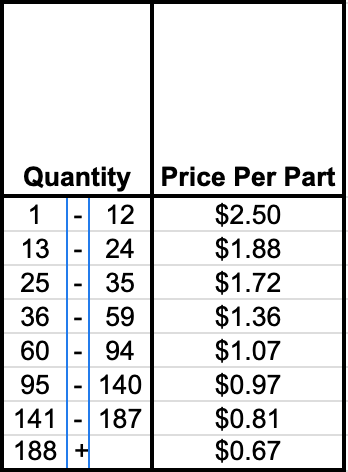
For each unique part, we’ll provide you with a per unit cost vs quantity e.g. $0.25 /part when ordering 20-40 parts
-
Tiered discounts are available based on total cut quantity for each unique part
-
Please note that all fabric/material costs will be invoiced separately
Optional services
-
Inside Cuts/Sealed Edges - +20% upcharge on the per unit cut costs for each part. For example, if the base cost is $0.25 /part, the cost would be $0.30 /part to avoid inside cuts and have sealed edges.
-
Special Packaging - If your job has special or specific packaging requirements outside of our standard service, this could be an additional cost. Our Cut Specialist will discuss these options with you when quoting the job
See below for an example of the price table that you'll receive for each part in your quote:
Coming soon
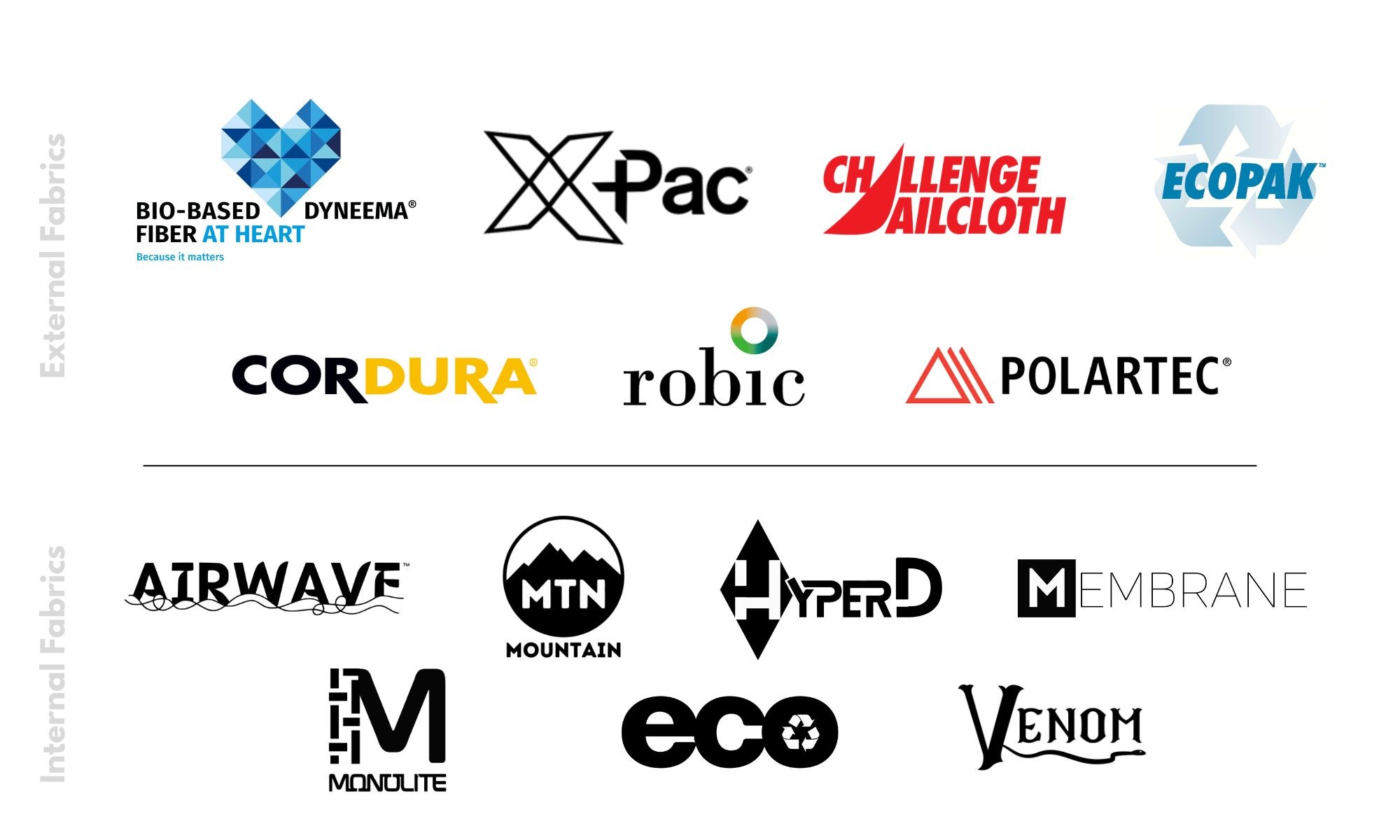
Our CNC and laser cutting machines can cut a wide range of materials, including all woven nylon and polyester, laminate fabrics, non-woven fabrics, mesh and 3D spacer mesh, stretch knits, and more. We can cut any fabric/material that we carry at Ripstop by the Roll.
At this time, we do not generally accept outside materials for cutting (those that we do not regularly stock). Accepting outside materials presents specific challenges to our workflow, including storage and inventory tracking. This may be a service that we offer at some point, but for now we only cut on our materials.
If you have a specific material in mind, please let us know and we’ll work with you to determine best option.
Coming soon
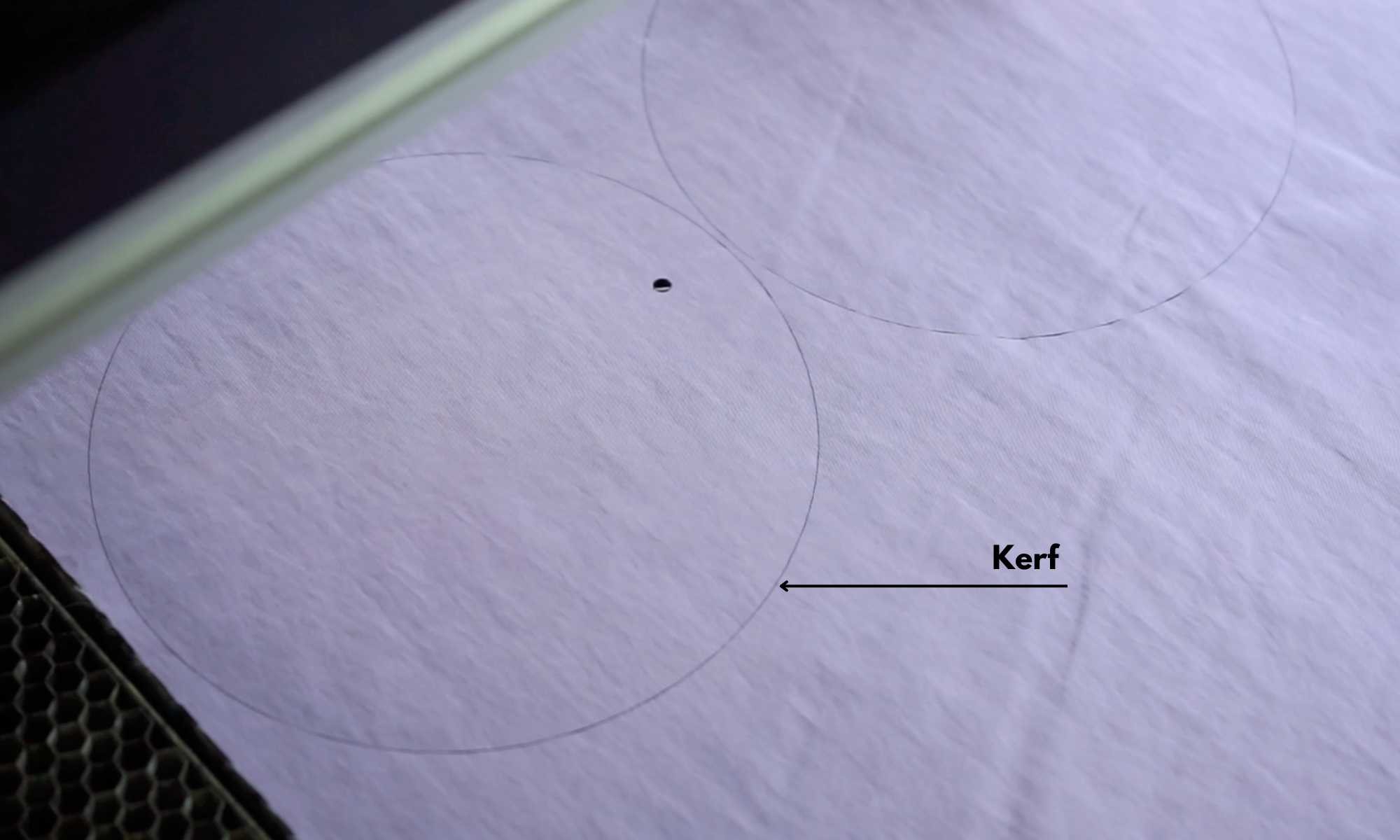
"Kerf" refers to the amount of material that gets burned away during laser cutting. The exact kerf width depends on a number of factors such as material, thickness, coatings, etc as well as machine settings. Kerf is typically very small (0.5 to 1 mm) so it can be ignored for most cutting jobs. That said, you should know about it and factor it into your cut files if necessary.
Yes, all fabrics have a right side and a wrong side. Identifying which side is which can be difficult but there are references that you can use to help aid your decisions when working with our materials.
For materials that have a PU Coating, the shiny side is the wrong side of the material. If you're familiar with HyperD 300, 210D Robic, or 1.9 oz Ripstop PU coated Ripstop Nylon these are good examples of a clearly coated side.
Please refer to our product demo videos to see an example of the right and wrong side. Each video starts with the right side facing the camera.
All of our cutters cut the material with the wrong side up.